When was the last time you texted a brand and actually got a response? Not a shipping alert. Not a promo code. A real reply.
Now flip it around. How many texts do you get in a day from a brand that you don’t respond to at all?
That’s the gap most SMS programs fall into. Brands adopted texting because it’s fast and personal, only to use it like email. SMS was never meant to be a broadcast channel.
People text to be heard. When brands invite replies and actually respond, engagement goes up, trust builds, and SMS becomes a long-term relationship channel.
The problem with one-way bulk SMS
Bulk SMS marketing was built for reach, not connection. It’s efficient, fast, and measurable, but it can only go so far.
One-way messages treat every subscriber the same. There’s no room for curiosity, intent, or nuance. When people reply and nothing happens, trust erodes fast.
On top of that, audiences have grown used to replying on WhatsApp, Instagram DMs, and live chat. A text message that doesn’t allow interaction feels outdated. Engagement drops because the experience feels impersonal and incomplete.
The moment conversation enters the picture, everything changes.
What is conversational SMS marketing?
Conversational SMS marketing is about using text messaging for genuine back-and-forth conversations, not just one-way blasts from a brand to its audience.
Here’s where it stands out from traditional bulk SMS:
- Messages are written to invite a reply, not just chase a click.
- Replies are expected, routed, and acted on.
- Every reply adds individual-level insight to make future conversations more engaging and personalized.
- Insight comes straight from deeper conversations, not just stats.
That back-and-forth builds trust. The number feels familiar. The relationship feels personal. Engagement soars and opt-outs drop because the messages actually feel worth reading.
Why two-way conversations drive higher engagement
A reply is a powerful signal. When someone texts back, they’re raising their hand, not skimming or passively consuming information.
Two-way SMS messaging works so well because it creates momentum:
- Higher response rates. Asking a simple question or prompting a keyword gives people an easy next step. Texting back feels intuitive in SMS.
- Stronger bond. Conversations humanize the brand. Even automated replies can feel personal when they’re timely and relevant.
- Better audience insight. Replies reveal preferences, intent, context, and sentiment in ways clicks never fully capture.
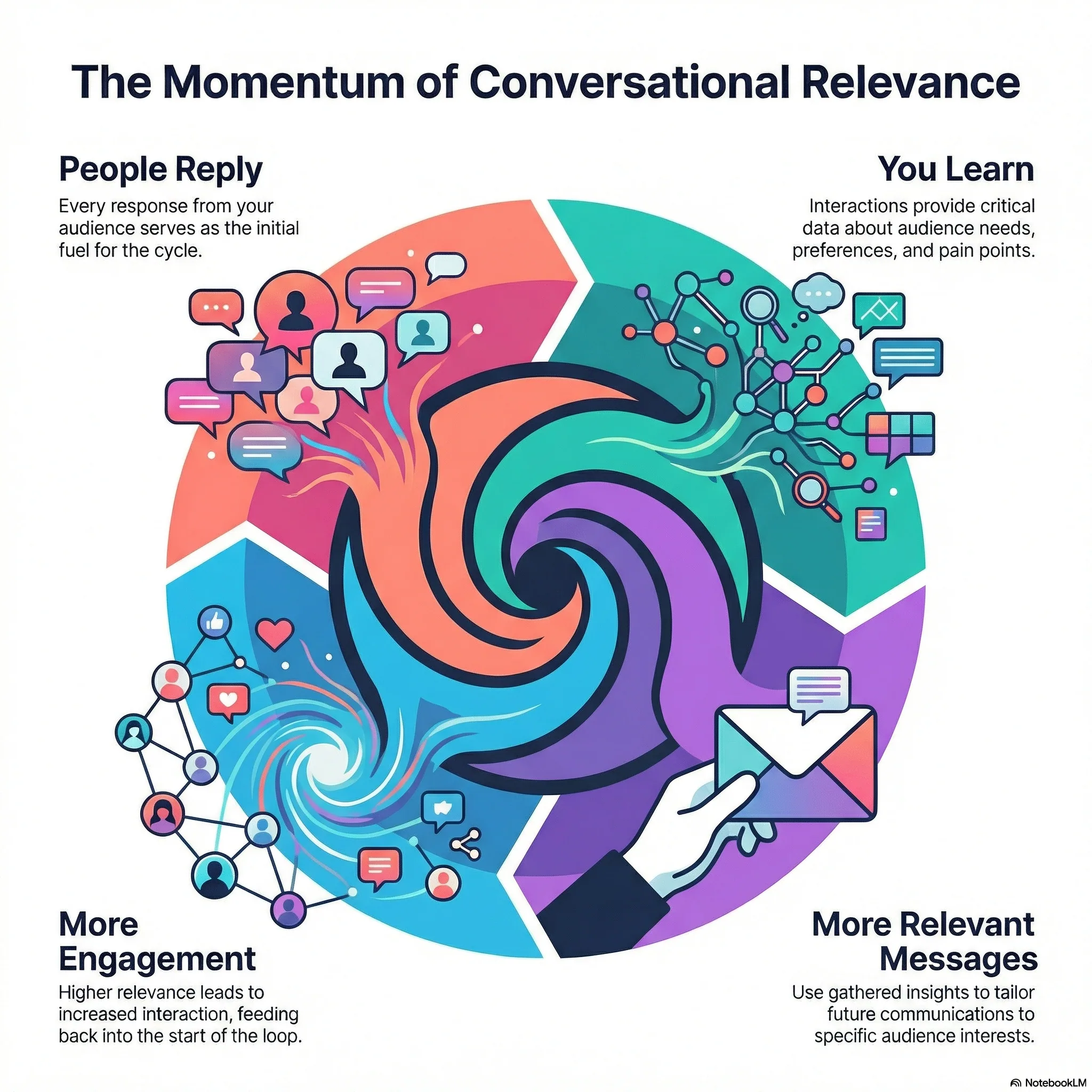
This is where the flywheel kicks in. The more people reply, the more you learn. The more you learn, the more relevant your next message becomes. And relevance drives even more engagement. Each interaction makes the next one better.
[](https://242365804.fs1.hubspotusercontent-na2.net/hubfs/242365804/Conversational%20Momentum%20Infographic.png)
Turning bulk messages into conversations
The shift from bulk to conversational texting starts with how messages are designed.
Start with an invitation to reply
A campaign can still go to thousands of people. The difference is what you ask them to do.
Instead of “Tickets are on sale now,” try “Which city should we visit next?” or “Interested in behind-the-scenes or event alerts? Reply BTS or EVENTS.”
Bulk messages tell them what you want them to do. Conversations reveal what they want.
Design messages that feel personal
Conversational messages sound like they came from a person, not a system. Think how you’d text a friend. Short sentences? Direct language? Emojis?
Make replies feel even more intentional by adding personalization and segmentation. It’s easy to send the same message to everyone. Sending the right one to the right group is what sets you apart.
Conversational SMS examples in action
Conversation works across industries and use cases. A few common patterns stand out:
Product launches and merch drops
Instead of announcing a launch and hoping people click, brands invite fans to raise their hand.
“New drop coming Friday 👀 Want early access? Reply EARLY.”
Those replies instantly separate casual interest from high intent. People who respond can receive follow-ups that match exactly what they asked for, without spamming everyone else.
Events and announcements
Event details land better when they feel like a conversation, not a calendar dump.
“We’re finalizing the event lineup. What sessions are you planning to attend? Reply AI or AUTOMATION.”
Text replies feel effortless. And when people respond, you can follow up with directions, reminders, or last-minute updates only for those who care.
Feedback and polling
SMS is perfect for quick input.
“What flavor should we launch next? Reply 1 for Sriracha or 2 for Barbecue or tell us what you want.”
Responses roll in fast and feel low-pressure. Get honest responses in minutes, not days.
Support and quick questions
When people text questions, handling them in the same thread builds confidence. Even a fast acknowledgment goes a long way.
This is the perfect use case for automated workflows for timely, yet segmented responses.
Using automation to support conversation, not replace it
Automation gets a bad rap when it feels cold. Used well, it actually makes conversations better.
The goal isn’t to automate everything. It’s to make sure no reply gets ignored and every response leads somewhere.
Use it to instantly acknowledge replies, route people based on keywords or intent, and trigger follow-ups depending on user behavior. Keep it human and helpful.
Best practices for conversational SMS marketing
Teams that succeed with conversational messaging tend to:
Set expectations early. Let people know they can reply and what will happen when they do.
Respond quickly. Speed matters in SMS. Automated replies go a long way when done right.
Segment conversations. Use replies to guide future messaging and keep it relevant for each group.
Don’t over-message. Conversations should add value, not noise. Fewer, better messages win.
Conversation is the future of SMS marketing
People don’t want more texts. They want better ones.
Two-way messaging turns SMS into connection, engagement, and trust. As expectations shift, conversation is the new standard.
Ready to see what conversational SMS looks like for your brand? Let’s explore it together!