Your audience let you into their texts. You can't get more personal than that.
That access comes with expectations. Members want messages that feel written for them, and they notice when a generic text is sent to everyone. Getting it right pays off: McKinsey reports that faster-growing companies drive 40% more of their revenue from personalization than their slower-growing peers.
What is the Personalization Loop?
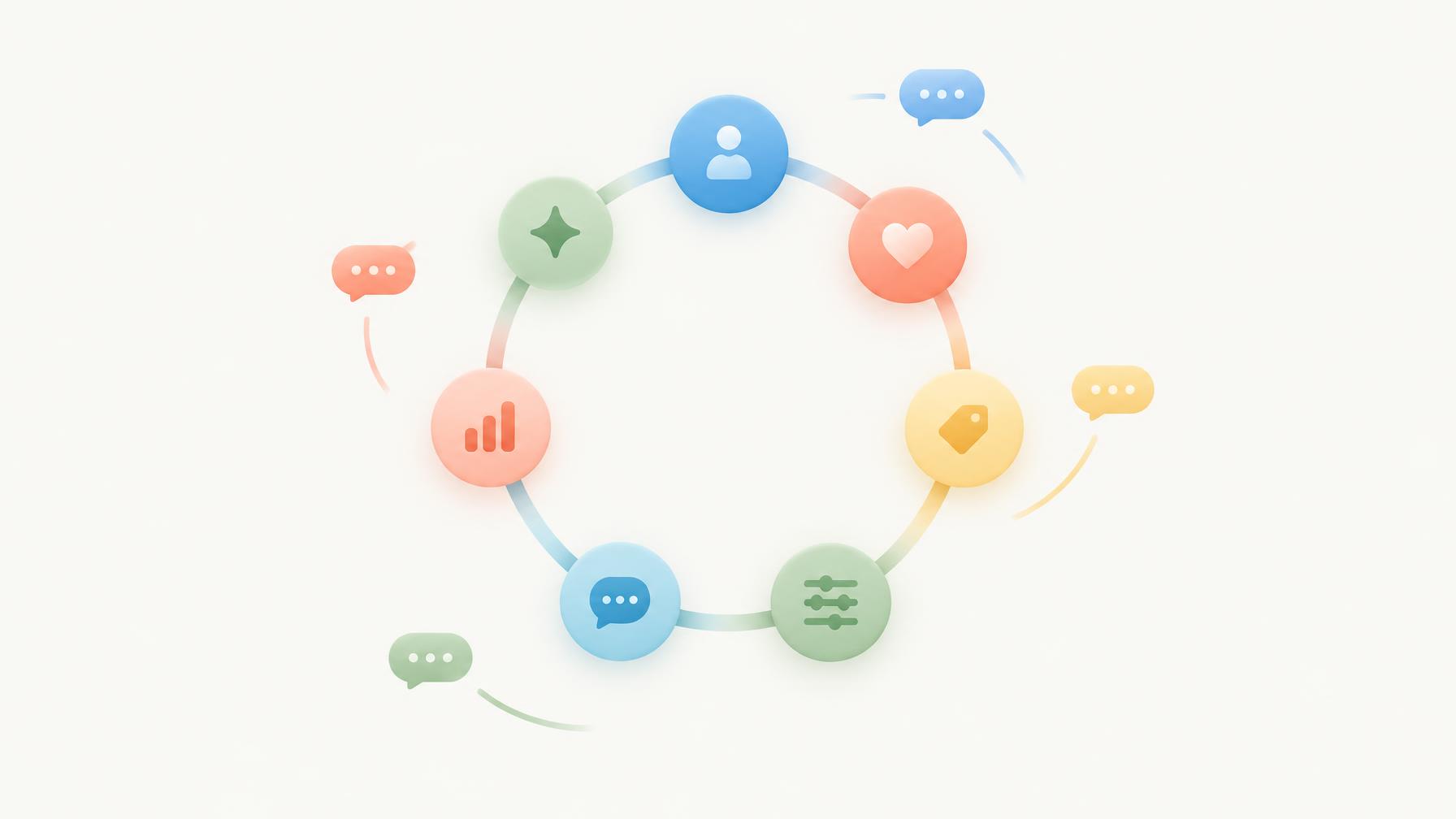
Community understands how to use personalization to drive engagement. We've created a Personalization Loop, which is a seven-stage framework for texting programs: Sort, Ask, Segment, Automate, Follow Up, Amplify, and Refresh. Each stage fixes one common personalization mistake. The last stage feeds back into the first, so your program learns more from your members every time it goes around.
Across more than 8 billion text messages sent through Community, the same patterns show up again and again. We’ve seen what works, and the mistakes you're likely overlooking. Here's what to watch out for.
Mistake #1: Making your team do the sorting your keywords should do
The fastest way to personalize is to let your sign-up do the sorting. When every member joins with the same keyword, your team has to manually match lists against other data sources to figure out who's who. Unique keywords tell you why someone joined from their very first text, and can route them straight into the right segments.
Mistake #2: A welcome message that talks at people
Your welcome flow is the best moment to start collecting zero-party data. A "thanks for joining, here's 10% off" text teaches new members to wait for a deal and doesn’t tell you much about them. Ask one easy question with clear reply options, then use the answer to shape what comes next.
Mistake #3: Blasting everyone the same message
Segmented sends outperform full-list blasts because every text reaches someone who wants it. Generic sends look great in reach reports, until it drives up opt-outs. Ashley Flowers, creator of the Crime Junkie podcast, reached an 89% click-through rate on hyper-personalized texts sent to highly targeted segments. Smaller sends cost less, too.
Mistake #4: Automation that ignores the context
Automation feels personal when every text ties back to something the member said or did. Picture a fan who has held season tickets for three years, getting the same single-game offers you send first-time buyers. Trigger your workflows on actual behavior, build exits for when the context changes, and keep your team ready to step in when a reply calls for it.
Mistake #5: Letting silence end the conversation
Every campaign response deserves a next step, including no response at all. Most programs follow up with the people who click and forget everyone else. Gotham FC texted fans about its season ticket waitlist, pulled a few responses that generated more than $10,000 in season ticket leads from a single follow-up text to non-responders.
Mistake #6: Treating the holidays as the finish line
High-volume moments like Black Friday/Cyber Monday mark the start of a relationship, so plan what happens after the sale. Thousands of new members join at once with high purchase intent, then get silence or generic promos in January. Make sure to continue communicating with your new audience and segment them by likes and interests.
Mistake #7: Assuming people stay who they were
Audience data goes stale, so your segments need regular refreshes. People move, change jobs, and outgrow old interests. Yet an old segment keeps texting the person they used to be. The Portland Timbers run a weekly Tuesday Trivia text that pulls a 62% response rate, and every week’s answers keep the club's picture of its audience current. Make sure to regularly send texts that help keep up with your audience.
Get the full playbook
Text message personalization comes down to whether your program is listening. The CMO's Survival Guide for Personalized Texting goes deeper on all seven mistakes, with a framework, an unconventional tip, and a team discussion question for each, plus a scorecard to see where your program stands.
FAQ
What are the most common personalization mistakes in text marketing?
The most common mistakes in text marketing personalization are manually sorting members after sign-up, sending a one-way welcome message, blasting everyone the same content, running automation without context, ignoring members who don't respond, treating the holidays as the finish line, and letting audience data go stale.
What is personalized texting?
Personalized texting means sending messages shaped by what you know about each audience member: why they joined, what they like, and how they've engaged. Relevance comes from the data behind each message.
What is zero-party data in text marketing?
Zero-party data is information members deliberately share with you, like their preferences or interests. Two-way texts make it easy to collect, because audience members can easily reply back. And that reply becomes data that you can use to personalize your next text.
How do keywords help segment a texting audience?
Unique keywords signal why someone joined a text list. For example, someone who texts “MERCH” signals something different from someone who texts “TOUR”. Routing each keyword into its own segment enables you to automatically sort members as they arrive, so your team skips the manual sorting later.
How often should you update audience segments?
Review every segment on a set schedule, at least once a year. Re-ask members about their preferences, check-in regularly, share a survey, and move them into new groups as their interests evolve.