You've done the work to build a direct line to your audience with text. Moving away from renting to owning your connections is step one. But now it's time to start building lasting relationships with the people who want to hear from you.
Owning your audience isn't enough if you don't have a strategy to segment your list by interests, behaviors, or other firmographic or demographic details.
So what's next? Now that you've built your audience and have subscriber data, it's time to segment your audience to tailor your next message to match their interests. That's what makes two-way text marketing so powerful, the ability to ask questions, receive replies, understand your audience, and identify what they care about.
That's how you go from blasting to connecting.
Why batch and blast SMS doesn't work
Think about audience members who have opted in. There's the person who bought from you three times this year. The one who signed up six months ago and hasn't clicked anything since. The subscriber in Denver who doesn't care about your New York pop-up. The fan who opted in for early product drops and has no interest in your weekly recap.
Sending the same message to all four of those people erodes trust and trains them to ignore your texts.
Salesforce research found that 73% of customers expect better personalization as technology advances. SMS is a personal channel. An irrelevant text doesn't get quietly ignored the way an email does. It gets an opt-out.
How to segment your SMS list
There's no single right way to segment, but these four approaches cover most of what brands need to get started.
Superfans and early adopters
Every list has people who engage with everything. They reply, buy early, and share what you send. Identify them through engagement history or let them self-select into a VIP group. Then give them something that earns that status: first access, the announcement before the announcement. The OKC Thunder took this approach with their most engaged fans and saw click-through rates above 50% on hyper-targeted campaigns.
Location
If you have events, store locations, or regional activations, location is one of the most practical segmentation tools available. Sending a New York opening to your full national list isn't just inefficient, it pushes people to tune out. Ask for location at opt-in, pull it from purchase data, or use a keyword flow to let subscribers self-select by city or region. Bert Kreischer's team uses geo-targeting to share tour dates and ticket links, and sees click-through rates consistently above 30%.
Interests
Your audience opted in for a reason, but not the same reason. Some want product news, some want event updates, and others want access or behind-the-scenes content. The cleanest way to build interest-based segments is to ask directly. A simple question at opt-in, welcome workflow, or a keyword-triggered campaign ("Text DROPS for product news, EVENTS for show dates," etc) gives you zero-party data, which is information people actively chose to share, the most reliable signal you have.
Purchase intent
Not everyone on your list is ready to buy. Behavioral signals tell you who is: who clicked the product link, who has bought before, who asked a follow-up question. Connecting SMS to your CRM or e-commerce platform makes this even sharper, letting you segment by past purchases, loyalty status, or membership tier without asking subscribers to tell you what you already know.
Download this free SMS Segmentation and Personalization Toolkit for more segmentation ideas.
How two-way SMS makes your list smarter over time
Segmentation gets smarter the more you know about your audience. The fastest way to learn more is to ask.
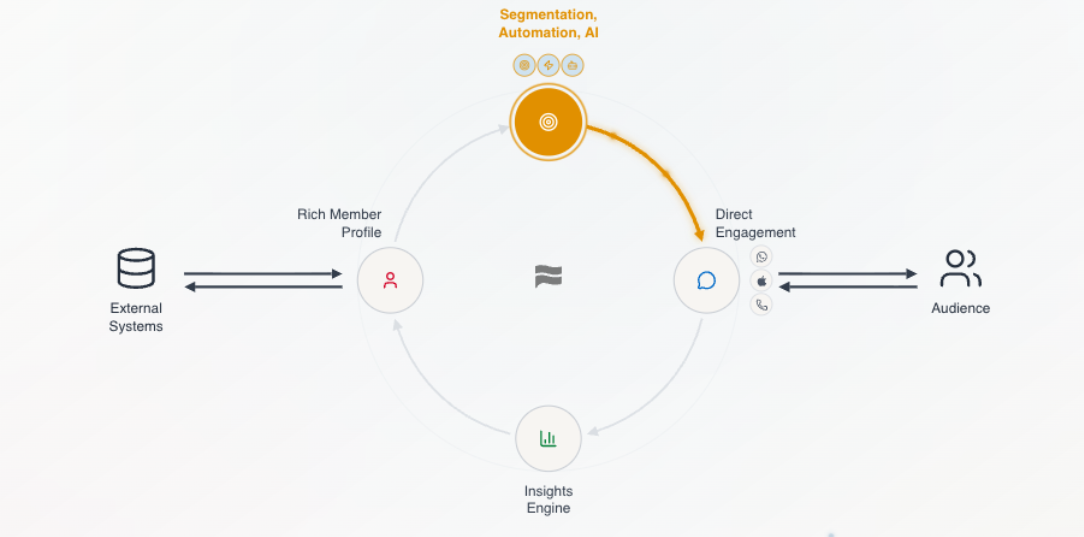
Text is the only major marketing channel that's genuinely conversational at scale, if using a two-way conversational platform. Subscribers reply. They tell you what they want and what they don't. That feedback feeds directly back into how you segment and what you send next.
With scale comes insights. The more messages you process, the more data you have, the better your messages become, and the higher engagement you receive. Every response makes your next text even better.
Three rules for effective SMS segmentation
Only text people who asked to hear from you. The TCPA requires explicit opt-in before any marketing text goes out. Remember: a small, engaged list will always outperform a large, uninterested one.
Segment first, write second. Who you're writing to should determine what you say and when to send, not the other way around.
Lead with value. Every message should answer this: why does this person need this? And why today?
Nothing beats precision when it comes to text marketing. Community is built for exactly this kind of audience nuance: segmentation by demographics, interest, location, and custom data, with two-way conversations built in.
Want to see how it works in practice? We're happy to show you.