
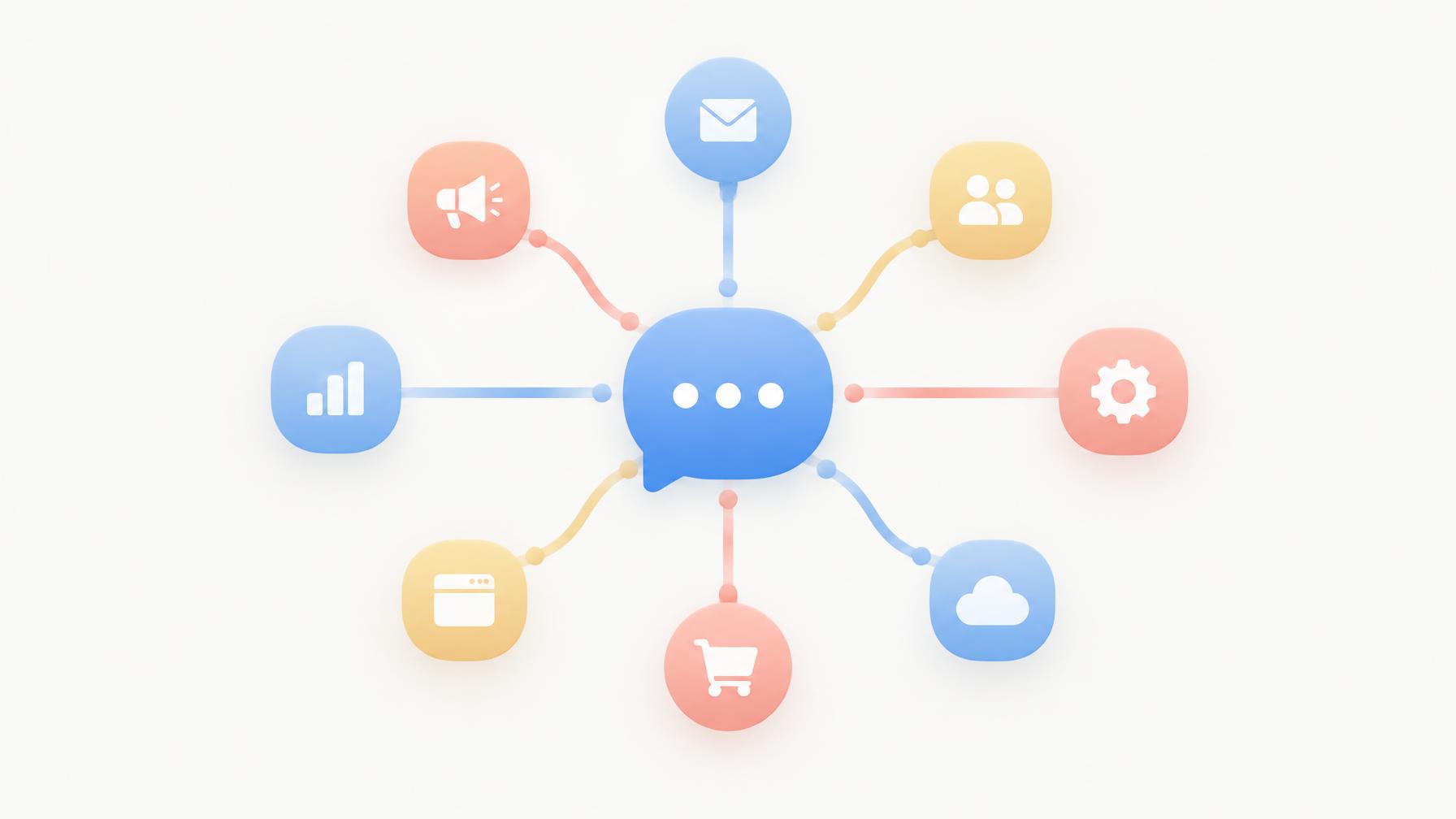
Picture this: a fan receives a text with the pre-sale link before anyone else, because they're in your VIP segment. They’ve shared their location so you can share shows happening near them. They buy four tickets. You text back to say thanks, then ask what song they're hoping to hear live and later who they’re bringing along. Then, the moment they scan into the venue, they get a personalized welcome with an offer or upgrade picked just for them. Now they feel seen and part of the show. That's what integrations make possible: they unlock the full story about your audience, so your texts are way more relevant than generic blasts sent to your entire list.
Marketers have gotten sharper. They're more data-driven, and they expect every data point to shape their next text. Integrating with your tech stack is key to taking your texts to the next level. But, if there's one thing we've learned from more than 8 billion messages sent to date, it's that the fastest-growing programs go beyond out-of-the box integrations. They run on something built specifically for their needs.
Why Integrations Matter in Text Marketing
According to MuleSoft's 2025 Connectivity Benchmark Report, the average enterprise runs 897 applications, and only 29% of them are actually connected to each other.
Community uses integrations to connect with customers’ entire ecosystems, from CRM to CDP and commerce to ticketing using Community’s friendly developer APIs. Every brand is different and needs unique solutions. And typically, no single system has it all.
Salesforce keeps your Data Cloud, Marketing Cloud Journey Builder, CRM and your texting program in sync with your Customer 360 view. Adobe Experience Platform and Adobe Journey Optimizer plug in too, triggering a text the moment someone hits the right step in a journey. Shopify gets you abandoned cart recovery and opt-in capture at checkout. Bandsintown, Seated, Set.Live, and more connect touring artists with fans based on where they are, what shows they've attended, or what they're likely to want to see next.
Our APIs and webhooks give brands even more flexibility. For concert venues, sports teams, media and entertainment brands, integrations connect ticketing platforms directly to their text list. When a fan buys a ticket, they can become a new text subscriber automatically, without anyone manually re-entering the same data twice.
For consumer brands, custom integrations can help close the distance between the people who make a product and the people who buy it. While the transactional data is typically in the hands of the retailer, consumer insight is crucial for the brand to gather feedback, develop new products, and create a brand that truly resonates with their audience.
The Maturity Curve and Custom Integrations
The more mature your text marketing program is, the more robust your database becomes. Community's Fan Connection Maturity Curve maps seven stages, from launch to value exchange and intelligence. Most programs start at broadcast. The fastest-growing ones use integrations to move through the curve faster.
As your program matures, and you gather richer data on your audience, that data tends to live across several systems and out-of-the-box solutions might not suffice. Sometimes, a simple custom integration brings it all together. Built to fit the way your program works, a solution can be designed to solve the challenges unique to your business.
Premium vodka maker Weber Ranch had a dream and turned to Community to make it happen: Tex, the brand’s AI-powered mixologist that lives inside their texting program, logged more than 4,000 conversations with a return engagement rate above 57% in the first six months. A recent survey pulled a nearly 12% response rate, four times higher than typical response-driven texts, proving that the custom integration resulted in a highly engaging channel.
What makes partnerships like this so successful is the level of commitment and collaboration in making something completely new come to life.
The Framework to Scale Up
Across industries, Community works with brands, artists, creators, and public figures to connect the dots to better communicate with their audiences. The path to building game-changing integrations follows a pattern:
- Understand: Before any code is written, the teams sit together to evaluate the current workflow, your tech stack, and your goal. From how their ticketing system talks to their CRM, to what the brand's voice sounds like, to what the ideal customer experience should look like, understanding the full scope of the solution is key to getting it right.
- Build: The integration gets engineered to fit that specific need, whether that means a new webhook architecture, an AI persona, or a new set of metrics to track. Nothing gets forced into a template that doesn’t quite fit.
- Scale: Once the solution works, the partnership keeps growing. The integration evolves well past launch. A single venue's ticketing sync can expand into an entire touring circuit. That kind of scaling only works when the foundation is built to fit in the first place.
Scale Your Text Marketing Program
According to McKinsey, companies that excel at personalization generate 40% more revenue from those activities than average players, and 71% of consumers now expect businesses to recognize them as individuals. The bar is only getting higher.
A checklist of integrations tells you what a platform can plug into. It doesn't tell you whether anyone will help build that special thing your brand needs. A bespoke solution only exists when a team believes in it and finds the right partnership to make it happen.
If off-the-shelf tools can’t get you where you want, it might be time to consider a solution designed for you. Curious what Community can help you build? Let’s talk.